NACS vs. J1772 EV Connectors: Which Plug Does Your Irvine Home Charger Need?
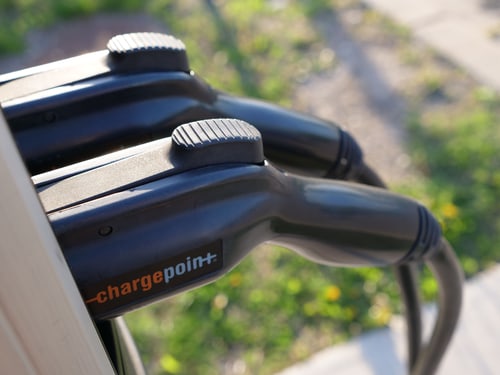
Pull into a driveway in Woodbridge or Turtle Rock and the real question is rarely whether to charge an electric car at home. It is which plug the home charger should have. The NACS vs. J1772 connector-type question has reached Irvine garages now that nearly every automaker has agreed to adopt Tesla's plug on future vehicles, and the shift leaves new EV owners unsure whether the Level 2 charger they install this year will still fit the car they buy next. The short answer is reassuring: both connectors charge any modern EV at home with the right adapter, and the plug on the wall matters far less than the electrical work behind it. Here is how the two standards actually differ, and what that difference means before you mount a charger on a Central Orange County wall.
The Short Version
- J1772 is the standard AC connector that nearly every non-Tesla EV in North America has used for Level 1 and Level 2 home charging.
- NACS, now formalized as the SAE J3400 standard, is the Tesla-designed plug that most automakers are adopting for new vehicles.
- A J1772 charger can charge a NACS car and a NACS charger can charge a J1772 car, each using an inexpensive adapter.
- For home Level 2 charging, both connectors deliver the same power at the same speed, so the plug shape does not change your charge times.
- The connector you choose matters far less than your panel capacity, circuit size, and install location.
- A dual-standard charger or an adapter future-proofs an Irvine garage against whichever plug your next car uses.
What the J1772 Connector Is
J1772 is the SAE-standard connector that nearly every non-Tesla electric vehicle in North America has relied on for AC charging. The U.S. Department of Energy's Alternative Fuels Data Center notes that Level 2 charging equipment uses the same J1772 connector that Level 1 equipment uses, and that all commercially available EVs in the United States can charge using Level 1 and Level 2 equipment. In plain terms, a Ford, Chevrolet, Hyundai, Nissan, or BMW bought over the past decade plugs a J1772 handle into the car for everyday home charging.
The connector itself is a round, five-pin design that has been the default on home chargers, workplace stations, and public Level 2 units for years. Its long head start is why so much of the existing charging hardware around Orange County, from garage units to shopping-center stations, speaks J1772 first. That installed base is a big part of why the connector is not disappearing even as the industry shifts.
What the NACS Connector Is
NACS, the North American Charging Standard, is the connector Tesla designed and later opened to the rest of the industry. It was formalized as SAE J3400, a standard the SAE issued in December 2023 that covers the physical, electrical, functional, safety, and performance requirements for transferring power to an electric vehicle. Standardization is what turned a proprietary Tesla plug into something any manufacturer can build a car around.
The appeal is partly physical: the NACS handle is smaller and lighter than J1772, and it uses one connector for both home AC charging and DC fast charging. The Alternative Fuels Data Center notes that vehicles with a J3400 connector can use that single connector for all charging levels. Over the next few model years, most new EVs sold in North America are expected to ship with a NACS port from the factory, which is why the question matters for a charger you are buying today.
How J1772 and NACS Compare for Home Charging
For a home Level 2 install, the two connectors are far more alike than the headlines suggest. Compared on the things that actually matter in a garage, the gaps are small.
Charging Speed
Charging speed at home is set by your circuit, not your plug. Both connectors carry the same single-phase AC power from a 240-volt circuit, so a 48-amp J1772 charger and a 48-amp NACS charger add range at the same rate. The handle shape has no bearing on how many miles per hour your car gains overnight.
Compatibility and Adapters
This is where most of the worry disappears. The Alternative Fuels Data Center confirms that all Tesla vehicles come with a J1772 adapter, which lets them use non-Tesla Level 2 equipment. The reverse is just as simple: a NACS-to-J1772 adapter lets a non-Tesla car draw full Level 2 power from a NACS charger. Neither adapter slows home charging down.
Hardware and Longevity
A J1772 charger installed today will keep working for the life of the hardware, adapter in hand, no matter which plug your next car carries. A NACS charger is the forward-looking choice for a household that expects NACS vehicles. Either way, the wall unit outlasts the car, so the decision is about convenience more than compatibility.
If you already own a J1772 charger, you do not need to replace it when you buy a NACS vehicle. A small adapter lets the new car pull full Level 2 power from your existing handle, and the same is true in reverse for a J1772 car on a NACS charger.
Why the Connector Matters Less Than Your Irvine Panel
Whichever plug you choose, a home Level 2 charger needs its own dedicated 240-volt circuit, and that circuit is where the real decisions live. In Irvine, where Southern California Edison serves homes from Woodbridge to the Great Park Neighborhoods, the deciding factor in a Level 2 EV charger installation is almost always the electrical panel, not the connector.
Many Irvine houses, especially older ones near Turtle Rock, have panels that are already close to full once the air conditioning, oven, and other large loads are counted. If there is not enough spare capacity, the fix is a service or panel upgrade for EV charging, which is the same job whether the charger ends up wearing a J1772 or a NACS plug. Mounting distance from the panel, whether the run is indoors or across an exterior wall, and permits with the city shape the cost far more than the connector does.
Which Plug an Irvine Driver Should Plan For
If you drive a Tesla today, a NACS charger is the natural fit and skips the adapter for daily charging. If you drive a non-Tesla EV, a J1772 charger plugs straight in, and an adapter covers you if a NACS car joins the household later. If you are genuinely unsure what your next car will be, a dual-standard unit such as Tesla's Universal Wall Connector, which features both the NACS and J1772 plug types, handles either car with no adapter at all.
There is no wrong answer here, only the one that fits your driveway and your cars. For Tesla households set on a single clean handle, a Tesla Wall Connector installation keeps things simple; for mixed or non-Tesla garages, a standard J1772 unit with an adapter on the shelf does the same job.
The Plug Is the Easy Part
The connector debate tends to swallow the attention that really belongs on the wiring behind it. Both plugs charge the same way at home, both have inexpensive adapters, and the industry is converging on NACS for new cars while J1772 chargers keep working for years to come. What actually settles a clean, code-compliant install in Irvine is whether your panel has room for a dedicated 240-volt circuit and where the charger needs to sit relative to your service. Size that correctly and the handle on the end becomes a detail you can adapt to either way. When you want that sized for your own garage, EV Charger Irvine can walk through Level 2 EV charger installation or, for Tesla owners, a Tesla Wall Connector installation, starting from the EV Charger Irvine homepage.
Not sure whether your panel can handle a Level 2 circuit for either connector? We will run the numbers on your actual Irvine service at no cost.
Instant QuoteMatch a Charger to Your Irvine Garage
The plug is the last thing to worry about. Tell us your car, your panel, and where the charger needs to go, and we will spec a Level 2 install that fits your Irvine home and whichever connector your EV uses.